

Bazley Beach, only 90 kms from Durban on the South Coast is the home of the well renowned MacNicol's Caravan and Camping Resort. The MacNicol family have been running this resort on the north bank of the Ifafa Lagoon for over 30 years and built up a great reputation as a family resort catering to the SA domestic market. The resort has access to the extensive Ifafa Lagoon and direct access onto the endless beaches. The resort has fully serviced caravan sites and a combination of Bungalows and Log Cabins. There are activities for bird lovers, trails, shore & lagoon fishing along with the wide open beaches for swimming. The resort has entertainment activities, pools recreational hall, volley ball, pubs, canoeing, and a shop, to mentions a few more of the attractions. Contact : macnicol@scottburgh.co.za or see www.macnicol.co.za
61 Photos
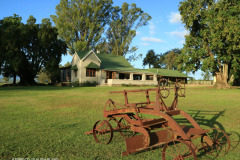
Dalmore Guest farm is an active farm lying between Bergville & Winterton. The farmhouse was built in 1913 but fell into serious disrepair and used as labourers housing. The farmhouse has been recently restored by the Blackburn family and is now a well established Guest Lodge offering both self catering and meals. The farm borders the upper reaches of the Spionkop Dam and is close to the Nature Reserve and Spionkop battle field.
58 Photos
Caversham Midlands Forest Lodge lies in the heart of the Curries Post - Balgowan area and has mainly log cabin type accommodation. This area is well known for its wedding venues, and the Lodge has good value accommodation.
23 Photos
This album has images of the hotel, spa, original self catering farm house that belonged to Meg and Trevor Wilson and its extensive sports facilities. The MOTH remembrance wall facing the Drakensberg features as part of the images in the album. Below is an extract from the Champagne Sorts web-site "Over the years, our Champagne Sports Resort team have crafted our offerings to create an award-winning resort, perfect for work and play. It’s not an easy balance to achieve, but we believe we have developed a truly unique destination that caters for every getaway need – all set in spectacular natural surroundings. Champagne Sports Resort has a Conference and Exhibition Centre with a floor space of 1200m2 (usable area), seating up to 1400 delegates and banqueting 850 guests at round tables, as well as 4 new boardrooms. We now offer a total of 16 conference venues. Other venues include the Sentinel Room which seats up to 1000 delegates, the Monks Cowl Centre, seating up to 550 delegates, the Summit Room seating up to 400 delegates and the more intimate venues ranging between 150 delegates, down to the private boardrooms seating up to a maximum of 20 people. State-of-the-art conference equipment, internet access and a convenient business centre complete the package. Little Explorers is our exciting kid’s entertainment facility, Game On is the teen and adult games room and coffee shop with adjoining lounge. Little Explorers has a dining room for the younger children wanting to eat earlier. The Wellness Centre features an upmarket spa, and the gym has been upgraded. The spa has five treatment rooms, comfortable change rooms and relaxing rest area with cane loungers looking up at the Champagne and Cathkin peaks. Our clubhouse overlooks a hidden golfing treasure. This top 30 ranked 18 hole championship golf course has been rated as SA’s most beautiful golf course in recent years, with the clubhouse rated in the top five 19th holes in South Africa". This album also has images of Gracelands, a guest house that has majestic views over Champagne Sports.
139 Photos
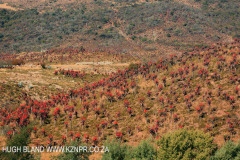
The Creighton Paton Country Rail operates out of Creighton, crosses the Umzimkulu River, and then runs alongside the Ngogwana River before arriving at the derelict village of Riverside. The rail uses a couple of steam trains and usually the 19 D Class GMAM Garratt. The train runs on special occasions throughout the year but is well known for its trips over the Aloe Festival, in June and July when the aloes are at their peak of flower. This album has images of the engine , different carriage configurations, municipal offices, Riverside stop and the widespread display of aloes.
180 Photos

Lake Navarone, is a resort situated in the foothills of the Southern Drakensberg. The accommodation is self catering cottages on the banks of two lakes nestled in the protected valley. The resort has a wide variety of activities, such as fishing, canoeing and numerous trails. It is also close to the Drakensberg Gardens Golf and Time Share resort and the Garden Castle Nature Reserve. This album has images of the accommodation, stunning views, walks and flora in the resort.
67 Photos
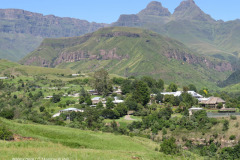
Drakensberg Cathedral Peak Hotel was established in the 1930's by the Albert Van Der Riet and continues to be a family owned and run hotel. The area in which the hotel is established is part of the Drakensberg World Heritage area and nestles in the foothills of the mountains dominated by the Cathedral Peaks. The hotel caters on a full board basis and has activities ranging from golf to tennis, bowls, hikes, helicopter flights, fishing and much more. The hotel has been expanded considerably, however the original sandstone footprint still takes centre stage.
150 Photos

The award winning Cavern Berg hotel is nestled into the mountains in the Oliviershoek area of the Drakensberg. The hotel is built on one of the old Boer farms in the area and is surrounded by the mountains and forest. The forest attracted early attention for it timber and in particular its giant yellowwood trees. The saw pits used to carve up this timber are still evident on the nature trails surrounding the hotel. The hotel was established in the late 1930's by Bill and Ruth Carte is still in family hands to this day. Many additions have been done over the years to the facilities and the accommodation.
100 Photos
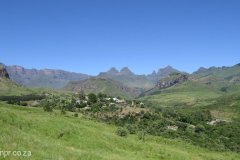
Didima and Cathedral Peak are resorts situated in the foothills of the Drakensberg Mountains, a World Heritage site. Cathedral Peak is a well known hotel which is popular with families and has numerous attractions like the golf course and usual games facilities. As with Didima which has a self catering, with access to dining facilities, one of the main attractions is the numerous mountain hikes and trails. At Didima there is also a chapel and comprehensive rock art centre. This album features some of what can be expected by a visitor to these resorts with the Berg as its backdrop landscape.
103 Photos
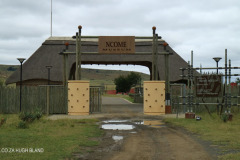
The eNcome Museum is situated across the river from the Blood River Monument. The eNcome Museum records the events that took place here in 1838, giving the history and backdrop to the defeat of the Zulu impi by the Boers. The Museum also gives a graet deal of information on the Zulu Kingdom, it's heritage and lineage. The site also has large auditorium and conference centre.
61 Photos
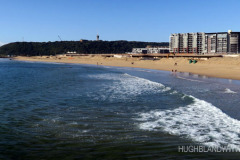
There are many images in separate albums, however this album has images from Moya Pier along the beaches and showing the extension of the promenade from Moya to the harbour mouth.
17 Photos
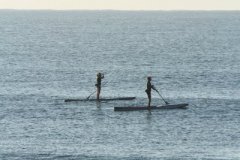
Durban\'s Golden beaches provide a paradise for bathers, surfers, jet skis , walking, and many more activities catered for along the eight kilometres of beachfront from the harbour mouth to Blue Lagoon. This album has photos along this beach area with a range of varying moods from sunrise to sunset along with aerial views of the beaches.
92 Photos
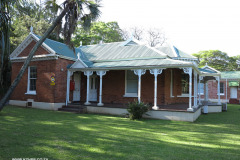
The Natal Agricultural and Horticultural Society was founded in 1848 and the first gardens established by Dr Charles Johnston on the south bank of the Umgeni River in 1849. The gardens were relocated from Umgeni River to the present site on the Berea thanks to marauding hippos helping themselves to plants. The Berea Botanic Gardens were laid out in 1851 under the guidance of Mark McKen (1850s/1860s). McKen had been responsible for introducing avocados, pawpaw, and mango into Natal. The gardens, Africa’s oldest surviving Botanical Gardens, cover an area of 15 hectares and water supplied from a 50000-gallon reservoir in the gardens. They were a public facility and to provide a home for newly discovered specimens destined for Kew Gardens in London. In 1881 the running of the gardens was transferred from the founding society to the Durban Botanic Society. The Durban Botanic Garden’s Medley Wood House was the original residence built in 1889 for the Curator of the Gardens, John Medley Wood (1882-1913), who had been appointed curator in 1882. The house has been restored and in 1986 the Department of Agriculture and Water Supply received a Conservation Award from the Durban City Council. This Victorian building with its green roof, red brick, wrap-around verandahs, decorative trellis work above the verandah posts and encaustic tiles on the veranda floors, gives the house its distinctive look. The house was funded by the public and fund raising by selling plants at a bazaar at the City Hall. A total of 1147 Pounds was raised, and the house completed in July 1890. The Natal Government Herbarium was established in 1882 and designed by the Public Works Department. It replaced a wood and iron building. The present Herbarium built in 1902 has an inset veranda, between two end-gables, with classical pediments. The interior has ornate pressed metal ceilings with offices each end. Since 1913 it has be used as offices, specimen storage, for botanical research and now also for training by the Department of Agriculture’s, South African National Biodiversity Institute or SANBI. About an acre of land was excised from the Botanic Gardens and the Herbarium and Medley House was transferred to the Union Department of Agriculture.
43 Photos
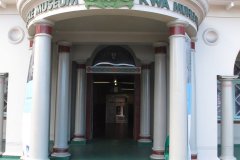
Durban's Kwa Muhle Museum was the former offices of the Port Natal Bantu Affairs Board but now features displays relating to the Apartheid " Durban System " and the struggle for dignity by its citizens. The album also has images of the Delville Wood exhibition set up in the Museum to commemorate this devastating battle where so many SA lives were lost.
77 Photos
Durban Marine Parade (O.R.Tambo Parade) is a feast of images covering the impressive beach front flats, hotels , Finlayson Pools, Promenade, Ushaka Marine World, Amphitheatre, Natal Command, Suncoast Casino, Art Deco buildings and aerial views of the beach front among many other images.
191 Photos
147 Photos
The flight from Virginia in Durban takes one down some of the coastal region for which this Province relies for much of its tourism. This album covers the trip from Virginia, over the Umgeni and follows the beaches to the harbour mouth and the Bluff. Following along this route takes one past Isipingo, Amanzimtoti, Kingsburgh, Illovo, Umkomaas, Scottburgh, and then on to Sezela Sugar Mill. The trip doesn't stop, with views of Umdoni , St Michaels, Margate , Uvongo and terminating ta Port Edward on the Umtamvuma River. Enjoy the aerial flip.
162 Photos
The Homestead is a three star resort in the centre of Geluksburg, and has 26 rooms, and caters for weddings, conferences, and general accommodation. It was owner Pennie Human's father who built the resort, and now Pennie is continuing the tradition, and personally ensures guests are looked after. The Homestead has well furnished rooms, and the hotel caters for meals in its dining room. Other facilities include a bar, games room and swimming pool. The Homestead is in the heart of mountain pass country, with Bezuidenhouts, Van Reenens, Retiefs, Oliviershoek and Middledale passes all within close driving distance. Contacts: 00-27036-4481328 and www.thehomestead.co.za
40 Photos
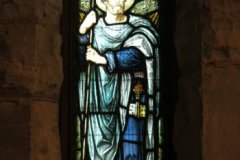
Giants Castle in the Drackensberg Mountains (a world heritage site,is the site of many of the protected Bushmen paintings found in the area with a comprehensive display in the protected caves. Ezemvelo Conservation runs well kept accommodation in the close proximity of the Bushmen Caves. En route to the caves, one comes across Rock 75 which is a carving into the rock made by the 75th Regiment in 1874 under the leadership of Colonel A.W.Durnford.(Isandlwana fame) His mission was to prevent stock theft by the Amahlubi tribe hiding out in Lesotho. The St Andrews Retreat B & B was formerly a sanstone church built by E.A.Thompson to serve the area and the Weenen County College & Weston College. The Chuch is beautifully restored with fine stain glass windows and plaques to those who lost their lives in WWI. The cemetery has graves of some of the early residents of the area, like J.W.Moor (died 1907), one of the first owners of Hertford.
70 Photos

Adventure and novelist, Sir Henry Rider Haggard was born 22 June 1856 at Bradenham, Norfolk, UK, the son of Sir William Rider Haggard. Haggards father send him to South Africa in 1875 to be assistant to the secretary of Sir Henry Bulwer, Lieutenant Governor of the Colony of Natal and old friends of the Haggard family. Haggard was to travel out with Bulwer and after a stopover in Cape Town arrived in Durban aboard the Florence.He later joined Sir Theophilus Shepstone, Commissioner for the Transvaal, as a member of his staff and witnessed the annexation of the Boer Republic of Transvaal, in April 1877, and ran up the British flag. Haggard met and married Marianna Louisa Margitson (1859-1943) on 11 August 1880 and returned to South Africa that same year. The intention was to join his friend Cochrane, farming ostriches at Hilldrop. In 1882, Haggard moved back to England, where he studied law and was called to the bar in 1884. He however was an uncommitted lawyer and commenced his writing career after settling in Hammersmith. It was King Solomon’s Mines (1885), that brought him fame, followed by She (1887), Allan Quartermain (1887) and sequel Ayesha. Rider Haggard’s book Jess is based on his time whilst at Hilldrop and his experiences farming ostrich, the travails of flooded rivers. In the book the farm Mooifontein can be recognised, as can Lion Kloof, the hill directly behind Hilldrop. Haggard was appointed Knight Batchelor in 1912 and Knight Commander of the British Empire in 1919 (KCMG). The original home built in 1875, forms the core of the bed and breakfast, built in 1981 stood on the 3-hectare site originally, the farm Rooipoint and later Mooifontein. Haggard had bought the farm with his partner Cochrane where they intended to farm cattle and ostriches. Haggard lived in this brown stone, thatched house at the foot of Lions Kloof, a kopjie, from 1881 until he left South Africa in 1882. The arrival of Haggard and his wife Louie had coincided with the outbreak of the first Anglo Boer War, and for a few days the family was laagered in Newcastle. After the losses at Majuba, a truce was signed on 6 March 1881, in the small cottage belonging to the O’Neil’s on Laings Nek. Hilldrop was rented out to British officials, including Sir Hercules Robinson presiding over the Royal Commission into the Majuba ‘affair’, for 50 pounds a week until 2 June 1881. The rent had alleviated Haggard and Cochrane’s poor financial state, whilst the family in the in the interim lived in the barns and mill-house. The events that had transpired had persuaded Haggard, that there was no future in South Africa, and he left in August 1881. The farm was left in the hands of George and a Mr North, the farm’s miller. Only two years later 29 April 1883 was the partnership dissolved and the farm sold. The furniture had been auctioned on 23 August 1881 when the Haggards left the farm, in the last weeks of August and Natal aboard the Dunkeld on 31 August 1882. The farm produced hay and mielies and erected a steam driven grinding mill and hired out wagons to the Government. Haggard’s Hilldrop house, on the outskirts of Newcastle was declared a National Monument in 1981. Haggard left after the first Anglo Boer War in 1881, after the terms of the peace accord had been negotiated in his home, after the defeat of the British at Majuba and signing of the truce at O’Neil’s Cottage. This resulted in the return of the Transvaal to the Boers. The irony was not lost on Haggard who had raised the annexation flag in Pretoria five years prior. Haggard revisited the Union of South Africa in 1914, for the first time since 1881 and reunited in Pietermaritzburg with his old servant friend Mazooku (correct spelling Masuku), who features in some of his books. Information from his visit to Mazooku and an old Zulu, Socwatsha, was the background for another book, Finished. Haggard and Mazooku, toured many parts of Zululand including Isandlewana and Nkandla, before taking leave of Mazooku for the last time in Pietermaritzburg. He was one of six Royal Commissioners reporting on the Dominions. He revisited Hilldrop and wandered around all his old haunts, before leaving for the last time. Haggard died on 14 May 1925 in Ditchingham, England and is buried under a marble slab in St Mary’s Church.
147 Photos