

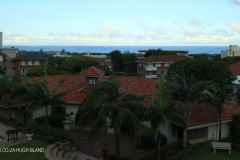
this album has images of the St James Anglican Church in Venice road , the foundation stones of which were laid in 1902 by Sir Henry McCallum (Governor). The images include the exterior, interior, Garden of Remembrance, Rolls of Honour for WWI and WWII. The other feature of this album is the Audacia Manor lodge across the road from St James. This Mansion was built by the Chapman family in 1928 but is now an upmarket boutique hotel.
106 Photos
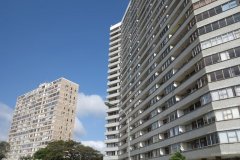
This large suburb of Durban has many iconic homes, and Schools. This gallery features the Kensington flats in Burman Drive, Mitchell Park, Goble, Nimmo, Trematon and North Ridge Roads. Featured also is Durban Preparatory High School, views of Springfield-Umgeni and the local athletic watering point of \"Fika Puza\".
261 Photos
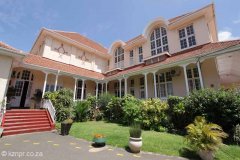
The school was started in 1896 by the Presbyterian Church of Scotland in a house, with Rev. T Tonkin as the Headmaster. In 1906 the school was transferred to the N.E.D. and in 1910 the present building replaced the original house. In the 1930's the school became the dual medium Stamford Hill School. During WWII a Cellar and bomb shelter was built (see images - now a classroom) and the school cadets were inspected by Prime Minister Jan Smuts, In the 1960's the school became Natalia Premiere School bit it was closed in 1981. During 1981/2 the Hunt Road remedial school was moved and renamed Livingstone Primary School, a school for short term remedial pupils. The Durban City Council awarded the school their Conservation Award in 1989 to recognise the school's conservation efforts relating to the buildings. The school has expanded over the years and is held in high regard by Educationalists and former pupils.
49 Photos
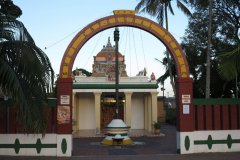
Mt Edgecombe to the north of Durban was a sugar growing area centred around the mill. It is now a residential area and there is no trace of the old mill. Phoenix was in the past an Indian residential area and has a vibrant commercial area. There are also many religious sites, the most prominent being the Hari Krishna Temple that dominates the skyline.
76 Photos

The Campbell family are synonymous with the development of Natal and like many other early families, they were brought out as part of the Byrne Settler Scheme. William J Campbell (1821-1865) and his wife Agnes set sail on the Conquering Hero from the Clyde, on 27 March 1850. On board was his son, Marshall Campbell (1848-1917), who was to continue his father’s legacy, that of pioneering Natal’s sugar industry. He acquired his first farm in 1857 on the banks of the Umhloti River called Muckleneuk, or ‘Great Bend’, in Scottish parlance. In 1895 Marshall founded Natal Estates Limited and started his own sugar refinery. Marshall married Ellen Blamey and lived in Mount Edgecombe. He was a member of the Natal Legislative Council and was knighted in 1916. The large township of Kwa-Mashu (Zulu meaning ‘the place of Marshall’), is named after him. Muckleneuk, in Essenwood Road, named after his father’s original farm at Umhloti was completed in 1914 in Cape Dutch Revival style. It was designed by Baker and Kendall of Cape Town with Cape Dutch gables on the corners and above the side entrance. Herbert Baker had designed the Union Buildings in Pretoria and many sandstone dwellings and churches. View of Muckleneuk from the terraced gardens. Two of his children, Margaret (Killie 1881- 1965) and William (1880-1962) were responsible for establishing the Campbell Collections on Durban’s Berea in their home Muckleneuk, where ‘Killie’ lived until 1965. In 1949 and 1952, bequests were made by Killie Campbell to the University of Natal for the purpose of establishing an Africana library. William eventually had taken over the reins on Natal Estates Limited from his father as Managing Director, in 1906. Further donations were made by her brother William and in 1954 he donated the Campbell’s Muckleneuk home to the Durban City Council, in memory of his parents Sir Marshall and Lady Campbell, in honour of the Pioneer families of Natal and to those who gave their lives in the two World Wars. Transfer took place in 1955 and eventually Killie’s earlier bequests were used for the benefit of Muckleneuk collections, which were to remain under the jurisdiction of the University. In 1965 the University negotiated a fifty-year lease from the Durban City Council over the property. The home now falls under the University of KwaZulu-Natal and comprises the Museum with the Campbell furniture, extensive valuable Africana books, art, furniture, and manuscript collections. Included are the artworks of renowned artists such as Barbara Tyrrell, Thomas Baines, Nils Anderson, CW Methven and Gerard Bhengu. There are also the magistrate James Stuart’s papers that record the oral history and traditions of early Natal. The Jo Thorpe Collection has examples of the culture of the indigenous peoples of South Africa, in particular the Nguni people. Another important collection is that of the Natal Land and Colonization Company that dealt in land for nearly a century. In the 1980’s the collections were enhanced with the purchase of Field Marshall Evelyn Wood’s papers. The Killie Campbell Collections Library was built onto the north of the building in 1968, designed by architects Lewcock, Templar and Claude. The two-and-a-half acre gardens designed by ‘Killie’ were constructed of stone walls and steps. The gardens are a haven for visitors, where both exotic and indigenous tree species co-exist and are visible from all the front rooms of the house. Many of the original species have gone or been replaced, however the basic garden layout has survived. The lower section of the garden is reminiscent of the extensive areas of indigenous bush that covered large parts of the Berea, prior to development. Extract from Hugh Bland's book, New Beginnings, published 2021
130 Photos
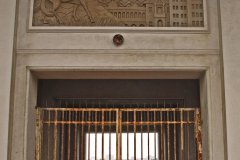
Natal Command, now only the facade remaining, was an important Military Base in WW2 and later during the \"Border War \". Many conscripts were dispatched from here to various military bases for National Service prior to 1994.
30 Photos
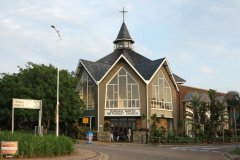
Durban North to the north of the Umgeni River is a large sprawling residential & Commercial area. This album amongst others features the Beachwood Golf Course,Varsity College,Kensington ,Mackeurtan , Umhlanga Rocks Drive and La Lucia Mall Commercial zones. The album also has images of the Blackburn Road Catholic & Methodist Churches,Crusaders Club, DHS Old Boys, old Haig Road School (closed),Lady Fatima Convent and aerial photos of parts of Durban North.
398 Photos
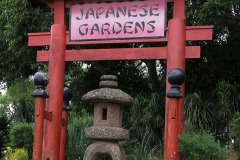
The Japanese Gardens in Durban North were opened on 27 June 1963 and are managed by the Durban Parks and Gardens. These gardens with their Japanese garden theme are a popular picnic spot and the gardens have many Japanese shrubs and the paths wind around a series of pagodas and water features.
43 Photos
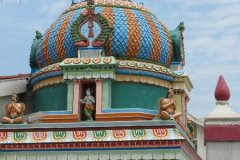
This area of Durban North to the West has featured, a church & cemetery in Effingham on Mhlangana Road, the Shree Ranganathal Temple, Kenville suburb houses and trading stores, Sea Cow Lake Temple & the Kenville Road Soofie Saheb Mosque. There are also some images of Avoca Road with some of the original wood & iron homes dating back to the 1800's.
103 Photos
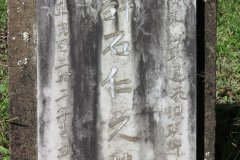
Redhill Cemetery in Durban North covers a huge area just off North Coast Road. Contained herein are images of Military Monuments and Graves dating from WWII, SADF & Police Memorials, Chinese Merchant Navy graves, the Jewish Cemetery and monument and general views over this Municipal burial ground. There are also images of some pages from the Cemetery register which give one some idea of the causes of death. These important Journals are not cared for and should be digitized.
97 Photos

This album of Durban North features images of interesting views of the Umgeni River Mouth, Kingfisher Canoe Club, Chapel House & Riverside hotel on Northway and the prominent Soofie Saheb Riverside Mosque (one of twelve Soofie Saheb Mosques).
172 Photos
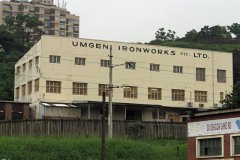
North Coast Road was the original route out of Durban to the north but is now the link road to the northern suburbs and townships west of Durban. The road is flanked by a mixture of commercial premises and factories.
88 Photos
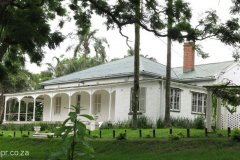
Northdene & North Park Nature Reserve derive their names from George and Elizebeth North who settled the area in the 1860\'s. North Park Nature Reserve which contains the North family graves was donated to the nation in 1969.The gallery also has images of the Northdene Station, Grace Baptist Church, Firwood Sports Club and some of the strip shops on the main road.
97 Photos
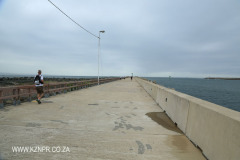
Durban's North Pier to the harbour was completed in February 2010 at a cost of R2.85 billion. The reason for the widening of the channel from 125m to 225m wide, (average width), was to allow for 9200 TEU vessels to enter the harbour. At the same time the channel was deepened from (on average) 12.8 m to 16m, and the new north groyn or pier extended by 550m. In order to absorb the sea energy, several methods were used, but the use of 20 ton Dolosse was extensively used. Dolosse are a South African invention. The credit for the design has always been given to the East London harbor engineer, Eric Merrifields, but the design was in fact that of draughtsman Aubrey Kruger, working in his office.
46 Photos
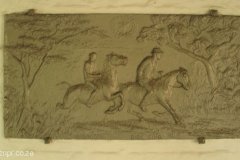
The Durban Old Fort was set up when British forces and Durban inhabitants were beseiged by the Boers in 1842. The Fort commemorates the ride to Grahamstown by Dick King (26 May 1842) to raise relief, has the St Peter in Chains Chapel, formerly the magazine, the Moths Museum and many other historical displays. Regrettably the site is being neglected by the Ethekweni Municipality and some of the exhibits in danger of dissapearing.
129 Photos
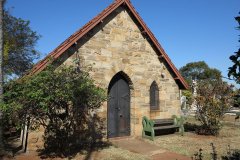
Old St Thomas Church in Ridge Road (Peter Mokaba) was started in 1864. The current church on site was built in May 1928 but a new Church which is currently used opened in 1899 in Musgrave Road. The church and Mission was started by Captain Allen Gardener R.N. who also named the area Berea. His daughter Julia lived close by and is buried here along with many original residents of the Berea area.
81 Photos
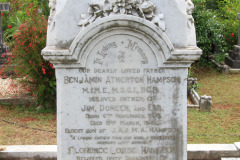
This album is the second album related to the old St Thomas Church in Ridge Road (Peter Mokaba) on the Berea. The first album features the Church and some of the graves, whilst this album covers the graves representing almost all the graves in this heritage cemetery. The graves include those of the Acutt family, Butchers, Vause, Tyrrell, Gardener, Innes, Currie and many other families all of whom featured in the development of early Durban.
386 Photos
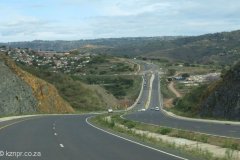
This album has images of some of the structures in Newlands West, Parlock, Fosa Park and Ntuzuma. Featured is the new bridge over the Umgeni River inland of the N2 freeway.
56 Photos
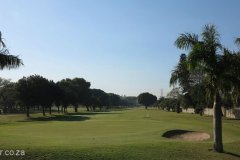
Reservoir Hills was previously reserved for the Indian community and consequently has several mosques and temples. The gallery has images of Mountbatten Drive, the Papwa Sewgolum Golf Course, views of the University of Westville and the iconic water reservoirs supplying Durban.
65 Photos
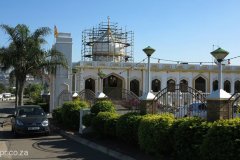
Sherwood is a suburb on to the west of Durban astride the 45th cutting. The 45th cutting is so named as the cutting was constructed with pick and shovel by the Sherwood Foresters or 45th Regiment of Foot based there in the mid 1800'2. Also featured is the Jungle Nursery, Soofie Bhaijaan Dharbar Mosque and the St Theresa's Church.
34 Photos