

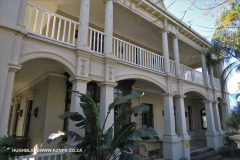
Jack George Hollis. Richard was born in Scotland and arrived in Durban in the late 19th century from Australia. He and Cornelius were awarded the contract to build the City Hall and work began in 1905. At much the same time Hollis built a home for his family [which still exists] at 174 Florida Road. Jack Hollis founded the Clairwood Racecourse and was a keen racegoer. George later became mayor of Durban. This album has images of Hollis House in Morningside which was being restored at the time of the visit. The house had been severely burnt at one stage, restored and used recently as a restaurant. Hollis House was declared a Provincial Heritage site in 1996.
26 Photos
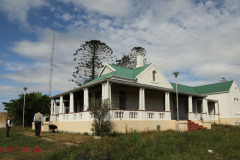
Immediately to the west of Durban North and to the west of the N2 lies the enormous sprawling township of Inanda. This album features an old sugar farmhouse on the top of Entafeleni which dominates the Inanda skyline on the western section of Inanda. This wrap around verandah homestead stands alone atop the mountain with panoramic views over Inanda and the distant city CBD. This area is also adjacent to Matikwe with the St Josephs Church and Mission school. Also included are images of some of the old dwellings on the northern slopes of Entafeleni.
70 Photos
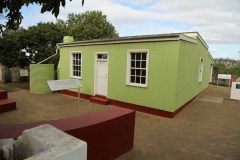
The settlement was founded in 1904 by Gandhi and it was here that the "Indian Opinion" was printed until 1961. The settlement was always at the forefront for the struggle for justice, peace and equality. During the 1985 Inanda Riots most of the settlement was destroyed, but then reconstructed. Gandhi's house (Sarvodya), the printing press building (1903) and the Museum and Interpretative centre are featured here.
67 Photos
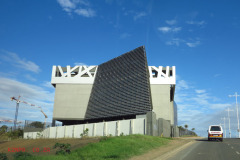
Inanda, to the North West of the Durban CBD was established during apartheid and was settled by the Indian and Black Communities. This album has images of the new development at Bridge City, some of the numerous churches scattered over the large township, images of the derelict original farm house and views giving some idea of Inanda's size.
129 Photos
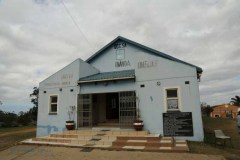
This gallery has images of several of the churches scattered around Inanda, Amatikwe & Umzinyathi. The churches include Afrika Congregational Church (1951), Africa Gospel Church (Amatikwe), Shembe Church Headquarters, and Inanda Congregational Church (1849), formerly the Inanda American Board Mission. The Umzinyathi falls, a tributary of the Umgeni River is featured, as this is a revered place of the Rastafarian community.
59 Photos
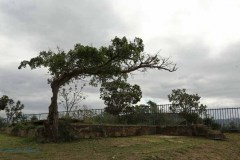
Ohlange (the origin of new growth) Institute or formerly The Zulu Christain Industrial School was founden by Dr John L Dube in 1900. It opened on 26 July 1901 and is also the first home of the founder. The album has images of John Dubes home, the John Dube Hall, the new amphitheatre under construction, the present school and the graves and memorials of John Dube's wife and son. Nelson Mandela cast his first vote here in 1994 to commemorate and recognize the fact that John Dube was the first President of the ANC. There are also images of the nearby second house of J Dube.
65 Photos
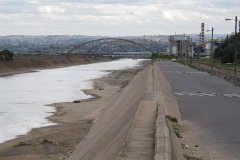
Merebank to the South of Durban is a residential area surrounded by heavy industry like the refineries and also until recently by the closed Durban International (Louis Botha ) airport. It also has access to the sea & beaches.
82 Photos
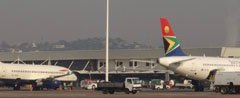
Durban International Airport (formerly Louis Botha)was opened in 1951 to replace the Stamford Hill Aerodrome. The airport was originally named after Louis Botha, Boer General and then first Prime Minister of the Union. The name was changed in 1994. With the completion of King Shaka International airport in 2010, D.I. was closed to commercial air traffic. The airport at 29.58.07 S and 030.56.52 E at an elevation of 9m ASL was 2439m long. D.I. has also been home to the S.A.A.F. No 15 Squadron but there are now plans to redevelop this old airport into a dug out port. Virginia airport was opened in 1959 after moving from Stamford hill Aerodrome (control tower now home of Natal Mounted Rifles).The airport was named after the adjacent suburb of Virginia. The airport was opened by Mayor Shaw and has been used by training companies , aircraft maintenance operations and light aircraft operators servicing commuters. The airport 29.46.14S 031.03.30E at elevation 6m is 925m long running 05/23 with an asphalt runway.
60 Photos
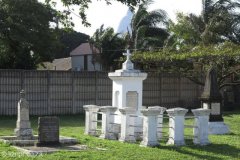
Isipingo and Reunion are to the south of Durban. The larger area is commercial in nature and lies to the west of the N2. Of significance though is the burial site of Dick King who lived in this area (1813 - 1871). There is a memorial for the Isipingo Concentration Camp victims on the same burial site. To the East of the N2 is the industrial area and the residential ares bordering the Isipingo River. Reunion to the north of Isipingo is a trading zone serving mainly Umlazi.
114 Photos
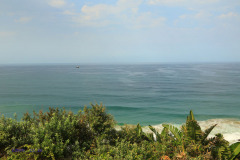
This album features the Isipingo Beach and bathing pools and also the Isipingo Island Hotel which has recently been refurbished and is on an island amongst the mangroves. There are also views of Tiger Rock pools and Ocean Terrace views.
103 Photos
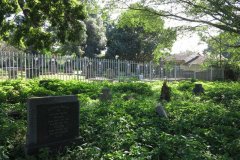
This old neglected Cemetery situated behind the Dick King Cemetery has graves dating from as far back as the 1860\'s onwards. Families such as the Mack\'s , Platts, Nivens, Hillary, Burchill and Dennills are buried here.There is also the grave of Lt Dennis A Platt who died of wounds received at El Alemein on 23 October 1942. Sadly the cemetery is not looked after and some of the graves appear to have been raided.
177 Photos
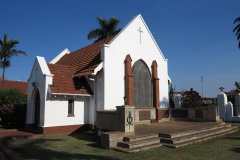
Durban Light Infantry , a mechanised volunteer unit was formed in 1854. It has seen service In the Anglo Zulu & Boer Wars , SWA, Namibia,East Africa, WW1 & 2 , Bambatha and Burundi.The H.Q. in Durban\'s Marriot Road has a Drill Hall, Chapel of St Michael & St George, Officers Mess Clock Tower and other Memorabilia. The Regiment has affiliations with The Rifle Brigade (UK) and The Royal Green Jackets (UK)
105 Photos
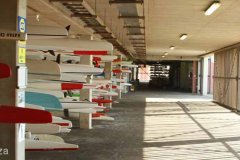
Durban Marine Life Saving Club was founded in 1963 and is located on Addington Beach. Over the years it has provided an essential service to the bathing community and has been credited with saving many bathers. The Club has a proud record of competing in lifesaving events and continues to train and promote beach safety. The new club house and surf ski racks were opened in November 2010 The clubhouse which acts as a meeting place also has a coffee shop and houses much of the club memorabilia and honours boards.
40 Photos
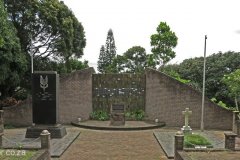
Queensburgh & Malvern form part of the older south western part of Durban on the Old Main Road & railway. The gallery features the Queensburgh CBD and Station, the Weslyan Methodist Church (1909), Malvern Congregational Church ( 1911), Queensburgh Sports Club,and Malvern Shellhole. The Malvern Shellhole has a VC recipient in Lord Cheshire. Also in this gallery is Flame Lilly Park which is also site of the Rhodesian SAS Memorial and the Vernon Corbishley Centre.
85 Photos
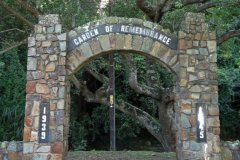
Memorial Park gallery has images of graves in the local private cemetery, the Hillary family graves in Coronation Road (desecrated), residences, commercial area and sports facilities in the area.
53 Photos
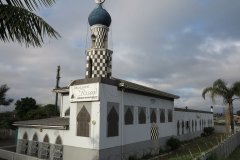
Montclair (Mowat Park) to the south of Durban was originally farmland and developed as Durban expanded. The area is residential and home to many schools , Churches and sports clubs, most notably Durban Wanderers Club. Merebank West is also residential surrounded by industry but featuring temples and mosques.
150 Photos
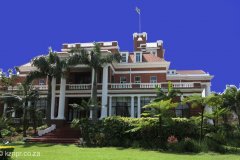
This gallery of Morningside features the stately Manor House that belonged to Sir Liege Hulett and the well maintained Jameson Park on the corner of Innes Road and Florida road.
105 Photos
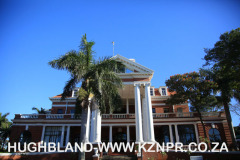
James Liege Hulett, born in Sheffield, 17 May 1838, emigrated to South Africa in 1857, on the ‘Lady Shelbourne’, initially to practice as an assistant to chemist, Mr Burgess. It was not long however before Hulett’s entrepreneurial spirit took hold and he started farming and acquiring property. His first farming endeavours in 1858 were at Mount Moreland, near Verulam, which were unsuccessful, so he moved on and bought 600 acres of land to the north east of Stanger, called Kearsney. Kearsney in England was a small village near Dover. His first successful crop introduced into Natal in 1850, was tea and this new wealth enabled him to build Kearsney Manor, which much later became Kearsney College. His first tea was harvested in 1887. Liege’s family took on the farming reigns and Liege became active in politics, a lay preacher, magistrate and was knighted by King Edward VII, in October 1902, after the death of Queen Victoria. The business was transferred into the Company, ‘J Hulett & Sons Ltd’ in 1892. This company was to become the listed entity, ‘Tongaat Hulett Ltd’. Further tracts of land in Tinley Manor were acquired. It was in early 1904’s that Sir Liege decided to retire to Durban, and it was at that point, that the stately manor house in Mentone road was built. The mansion was designed by Stott & Kirby Architects, and in 1906 the mansions was occupied by the Hulett family. Lady Mary Hulett, died in 1915 and Sir Liege, died aged 90, in 1928. Both Liege and Mary are buried in the family cemetery at Kearsney Manor graveyard. For many years, the Manor House stood vacant until 1932 when it was acquired by LM Loumeau and operated as a hotel under the name Manor House Hotel, was vacant between 1933 & 1934, and the run as the Kew Hotel, Nuttal Gardens until 1945. The owner J Vaughan Greene then converted it into a private residence until 1949, when it was sold to GH Langeler and reverted to the Kew Hotel until the 1960’s. Between 1965 & 1989 the property became the Morewag Men’s Hostel owned by the Nederduitse Kerk. In 1990, the property was sold to David Strachan & Taylor (Auditors) and then sold to De Leuw Cather Inc. and converted to offices.
134 Photos
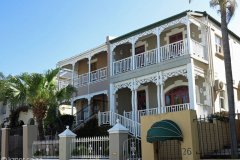
This Gallery features many of the old homes, flats, churches and city views of this area which overlooks the City. The area is rapidly changing and many of the old homes are being torn down and replaced with modern glass and chrome structures.
192 Photos
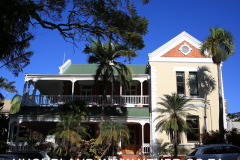
303 Florida Road was one of three adjacent houses, 303-309 Florida Road, one of the three being the well-known ‘Atherton’, now a restaurant. Their plans date back to the 1900’s and 303-309 were built for George Browne and Sir Abe Bailey in 1903. The one home above 303, is now a block of flats. Sir Abe Bailey was a wealthy ‘Randlord’ and politician, having made his fortune on the goldfields of the Witwatersrand. After WWII, these three Edwardian houses were joined and converted into a private hotel, the Dorchester Hotel and later in 1972, they became a retirement home, Cottam Grove. The homes proved costly to maintain and in 1988, 303 and 309 Florida Road, were acquired by I.G.I Assurance Company (Pty) Limited for R1.m. and a long battle by several heritage societies to save them from demolition. Neighbouring house, Atherton, was also acquired and in 1989 an amount of R900000 was spent on restoration. 303 and 309 Florida Road were proclaimed National Monuments in February 1989, with John Frost BArch 1961 receiving a conservation award for the restoration of Cottam Grove in 1991. The buildings were extensively renovated to their original condition, bringing to life their colonial majesty. All doors, windows skirtings and rails were removed and restored to their original condition and the pressed metal ceilings renovated, where rust had taken its toll. These Edwardian villas have gabled façades and upper and lower verandas, the lower being wider and corner verandas with intricate timber detail. The verandas have encaustic tiles, and the extensive use of stained-glass windows and doors give the house a tranquil interior ambience. 303 Florida Road (Erf 784) was bought by law firm John Hudson & Company, Attorneys, one of Durban’s oldest Law firms, in 1996, for R1230000, and thus saving this historic home, in this instance as offices. Extract from Hugh Bland's book' New Beginnings' , published in 2021.
67 Photos