

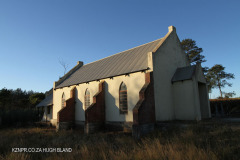
Entumeni Mission to the west of Eshowe on the Nkandla road was established in 1852 by Norwegians. The original church still stands and is surrounded by the graves of its previous ministers and sisters. The album also has images of the 1955 established Schreuder Memorial Church. The area was an important sugar producing area and was serviced by the Ntumeni Mill until its closure.
43 Photos
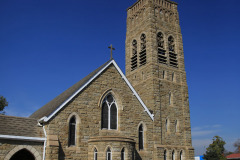
St Mathews Anglican Church in Estcourt is a beautiful example of a church built out of local sandstone in 1882. The first church was built on the Bushman's River in 1872 and then moved up to its present position in Lorne Street. The church was dedicated in 1882 by Vicar George Smith (1872-1879). The interior has as special ambience with most of the windows reflecting light through the stained-glass windows that have been donated by local families. The main altar stained-glass windows bear the names of men of the district who died in WWI. The church tower was extended later with a Gothic look about it. Alongside the church is the graveyard which is in a separate album on this site.
66 Photos
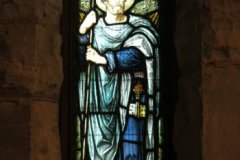
Giants Castle in the Drackensberg Mountains (a world heritage site,is the site of many of the protected Bushmen paintings found in the area with a comprehensive display in the protected caves. Ezemvelo Conservation runs well kept accommodation in the close proximity of the Bushmen Caves. En route to the caves, one comes across Rock 75 which is a carving into the rock made by the 75th Regiment in 1874 under the leadership of Colonel A.W.Durnford.(Isandlwana fame) His mission was to prevent stock theft by the Amahlubi tribe hiding out in Lesotho. The St Andrews Retreat B & B was formerly a sanstone church built by E.A.Thompson to serve the area and the Weenen County College & Weston College. The Chuch is beautifully restored with fine stain glass windows and plaques to those who lost their lives in WWI. The cemetery has graves of some of the early residents of the area, like J.W.Moor (died 1907), one of the first owners of Hertford.
70 Photos
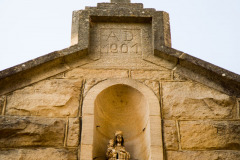
Hardenberg Trappist Mission established in 1897 lies about 12 kilometers north of Matatiele. The Mission was established at the request of the O'Reilly family and built on the Oliver family farm. (Ref: Triump and Tragedy : Trappist Missions in S.A. - Nicki Von Der Heyde - 2018 - Mariannhill Mission Press.) As was usual, the first buildings were rudimentary, and then followed with the more substantial structures. The present church was built in 1899. By 1927 there were 3 schools. The present site has substantial residences, a convent and the church has been extended to cater for a larger congregation.
41 Photos
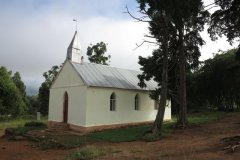
This Gallery follows the road from Nkwaleni to Vryheid and has images of the 1878 Zulu War of Fort George, Gluckstad village, Bethal Mission with Stallbom graves and a few other sidings and places of interest. Fort George is not very visible and only the worn down ramparts remain.
60 Photos
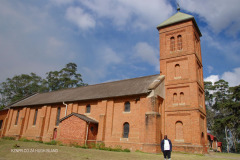
Himmelberg Mission between Umzinto and Jolivet is one of the more than twenty missions built by the Marrianhill monks. The Mission built in the 1890's has the original wood and iron church, the brick church built later in 1933 and is also home to the Himmelberg Intermediate school. There is also the convent and nuns accomodation about 500m to the north of the Mission complex. These structures are featured on this site.
50 Photos
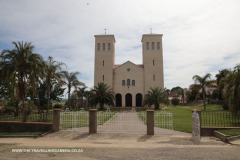
Inkamana Abbey was founded in 1922 by Bishop Thomas Spreiter OSB. The Abbey belongs to the Missionary Benedictine Congregation of St Hiler with the mother church 40 km from Munich. The Monks bought land about 5 kilometers from Vryheid on the Ulundi road and built a church, school, workshops and established vegetable gardens and orchards. The school was started in 1932 and the Abbey church built between 1950 and 1952. The school has about 200 boarders . Twelve other smaller missions were established in Zululand.
55 Photos
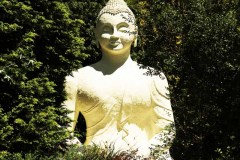
The Buddhist Retreat Centre close to Ixopo and 90 kilometers south of Pietermaritzburg is established on a 123 hectare estate facing north towards the majestic Umkomaas valley. The Retreat is considered to be in the top 10 meditation centres in the world that was founded over 40 years ago by Louis van Loon. The Centre is a refuge set in amazing beauty and offering retreats for persons wishing to learn more about the Buddhist philosophy, learn about the ancient techniques of meditation, attend a variety of mind enhancing lectures, or simply to escape the frenetic society we live in and free the mind. The Centre has a range of accommodation, walking trails, majestic gardens with the support facilities of a meditation room, studio, zen gardens, labyrinth and not to mention a large variety of birds, indigenous trees and views unparalleled. Whatever your religious convictions you will be welcomed with grace and warmth. The cherry on the cake is the full of flavour vegetarian meals for which they are renowned. Email: brcixopo@futurenet.co.za
86 Photos
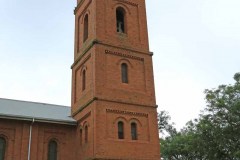
Mariathal Trappist Mission, built by Francis Pfanner is about 5 kilometers north of Ixopo. The once vibrant missionnow functions essentially as a school with the mission providing the community with a gathering point.
162 Photos
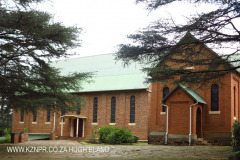
Ixopo Convent or Missionary Sisters of the Precious Blood was established in 1923 and has been the base of the sisters ever since. The sisters continue to give pastoral care to disadvantaged members of the surrounding area, and the Convent is a training ground for new members. This album features the convent, church, and the extensive cemetery of former sisters.
65 Photos
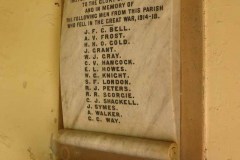
The St Johns Anglican Church in Ixopo has many of the graves of the early settlers in its Cemetery. This album features about 220 of the graves.
216 Photos
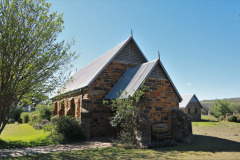
"Like so many rural Anglican Churches, St Peter’s, situated in a rather remote area of Natal, under the shadow of the Drakensberg, was motivated by the demand of local faithful. St Peters was built on farmland donated by Henry Lang who also played a major role in its construction. The materials for the building were carted all the way from Rosetta siding by Arthur Ratsey. Built of stone under an iron roof, it remains a most attractive rustic church in the traditional English style. Funding was entirely through private donations by the locals. A small graveyard recalls the names of many donors. The most intriguing memorial is that of the Hamilton family which records Mary Hamilton, aged 10 months, was buried there in August 1911, Barbara Hamilton, aged 30 months, in April 1912, Noel Hamilton aged 6 months in June 1912, Jeannie Hamilton buried in June 1916 aged 7 months and Natalie Hamilton aged only 3 was interred in January 1918. There are no church records of the Hamiltons, their lives and tragedies remain a mystery". St Peter’s was consecrated in 1907 by Bishop Baines with a commencing congregation of 91. Ref: Anglican Meander : Anglicans in the KZN Midlands.
27 Photos
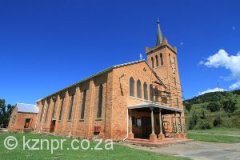
Kevelaer Mission built in 1888 forms part of the satellite missions falling under the \"mother\" monastery in Marrianhill started by the Trappist Order. This album has images of the interior, exterior and some of the support buildings relating to this Mission which is on the outskirts of Donnybook.
92 Photos
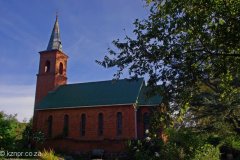
St Isador\'s a former Trappist Monastry is now an accommodation venue known as Kings Grant. The gallery has images of the chapel, old Mill Museum, and the Brickwork (Murchison) barns where Dick King\'s daughter lived. The barns overlook the Schreiber dam built by Italian P.O.W.\'s in WWII. The venue can be booked for overnight stays, conferences or weddings. Also included is St Mary\'s Seminary which is now a health F.E.T centre. The centre has dormitories and a chapel linked on to the residential area.
119 Photos
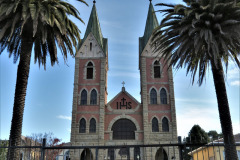
St Patrick's Cathedral at 107 Hope Street is the cathedral of the Diocese of Kokstad. In 1888 the Sisters of the Holy Cross arrived in Kokstad and started the Holy Cross School. A small chapel had been built in 1884 and with the growth of the town a new church was required. The Holy Cross Sisters did the fundraising for the new Church and the Foundation Stone was laid by father Adalbero Fleischer in 1924. Adalbero was one of the Trappists who then became part of the Mariannhill Missionaries. In 1952 Pope Pius XII created the Diocese of Kokstad and the church became a Cathedral with it's own Bishop. The Cathedral has many stained-glass windows, a side chapel and memorabilia including stations of the cross.
104 Photos

Westville Catholic, Lady of Our Lourdes Church was blessed in 1959 and Consecrated in 1981 by Archbishop Denis Hurley. The church is richly blessed with many stained-glass windows.
52 Photos
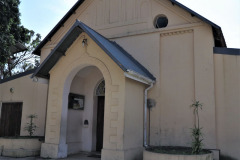
This album has images of the mission and associated structures. The Mission area had a turbulent history as this excerpt fro SA History Online illustrates. St Wendolins was situated about 14 km from Central Pinetown, on land owned by the Roman Catholic diocese of Mariannhill and individual African Plot Holders. The Wendolins Area was Settled by the Maphumulo and Mangangeni Ethnic Groups, before the Colonization by White people. The Mangengeni Community were Settled along the Umhlatuzana River in the Pinetown area. With the arrival of Missionaries, Chief Manzini asked the Missionaries to work with the Community, to teach them to Read and Write. In 1882 Father Franz Pfanner bought Zeekoegat, a Farm from the Natal Colonization Company and Mariannhill Mission, was Built on this land. The Church also brought surrounding Farms including an Adjacent Farm known as Klaarwater. It was on part of this Farm that the Community of St. Wendolins was Established. African Church Members, were allowed to Buy or Lease Land, at St Wendolins from the Mission. . In August 1957, St Wendolins Residents were astonished when plans for implementing the Group Areas Act, were announced in the Magisterial District, of Pinetown. The area West of the Umhlatuzana River was proclaimed as a Coloured group Area, with Klaarwater and St.Wendelin’s proclaimed, as an Area for Indian people. Land between the River and Pinetown, was declared White. This included the Monastery, Hospital and Convent. The African people that under Proclaimed Areas, had to Leave. In June 1970, Marianhill, Zeekoegat, Klaarwater and St Wendolins were incorporated into the Pinetown Municipal Area. Towards the end of 1970, Forced Removals commenced. In 1979, the Port Natal Administration Board(PNAB) issued all Tenants in St. Wendolins Ridge and Savannah to vacate their areas within a year. On 8 January 1980, the PNAB began demolishing their Houses. More people were Forcibly Removed to KwaNdengezi and KwaDabeka Townships, in the former KwaZulu Homeland. Excerpt with recognition to: Reference : South Africa History Online
28 Photos
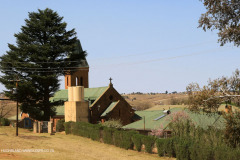
Maria Linden was an outreach for Mariazell, further up the Ongeluksnek valley. The land granted by the local chief was built on in 1896 and completed in 1897, along with a school. The church was enlarged in 1990. At one stage the congregation was 1086. The enlargement comprised adding side aisles whilst retaining the original nave. Murals on the walls had to be carefully removed using special techniques under the guidance of Robert Brusse.
39 Photos
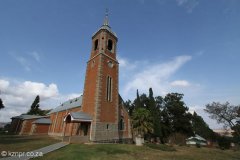
Maria Ratschitz Mission was established in 1889 by Trappist Monks. The church is also known as Church of our Lady of Sorrows.The Mission which now runs a hospice has recently been renovated. The Church has a tall bell & clock tower and the interior has ornate friezes and stain glass windows. Outside there are numerous religious murals and the finely illustrated twelve stations of the cross.
103 Photos
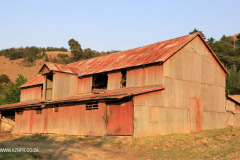
The site of this mission was on a 600 acres of land owned by farmer Reuben who due to financial difficulties agreed to sell the property to Brother Streicher . The present sandstone church was completed in 1909, and Yellowood from Lourdes was used in the construction. The mission is named after a German pilgrimage village near Munster. The mission was started in 1895 and in 1897 Sisters arrived to assist with the farming and school. The barn in this album for livestock and later a dairy below and a loft above, built in 1901. The boarding school was built in 1908 and are still used for this purpose.
121 Photos